


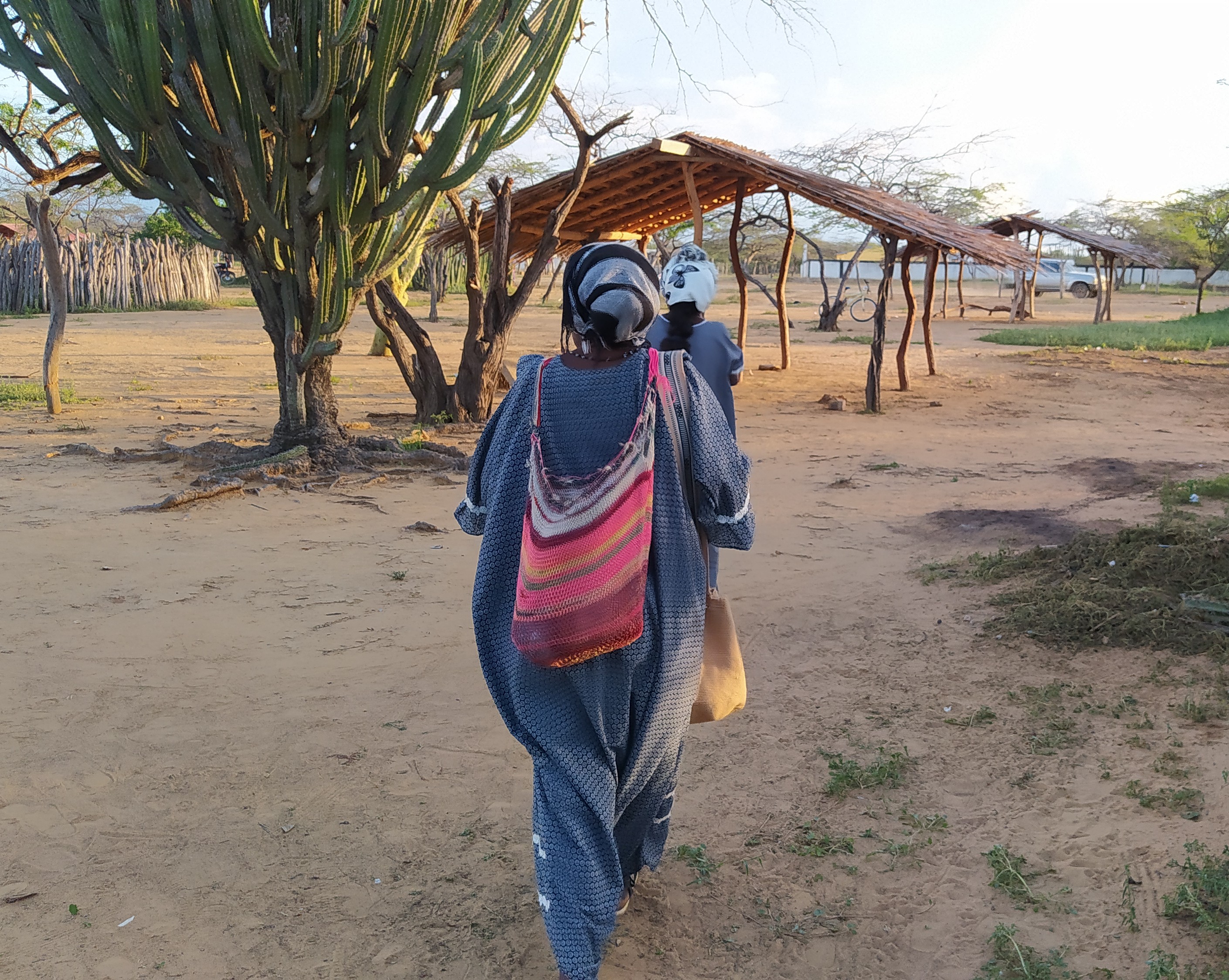

Cultura Wayúu
Encuentre aquí definiciones estandarizadas.
Conceptos clave para comprender el pueblo indígena Wayúu
Pueblo indígena Wayúu
Grupo étnico de ascendencia amerindia que habita en la península de la Guajira, en el norte de Colombia y en el noroeste de Venezuela sobre el mar Caribe. Su identidad se construye en torno a su pertenencia al territorio ancestral Wayúu, a su división por clanes o e’irukuus, al uso de su lengua propia Wayuunaiki, al reconocimiento de sus autoridades territoriales o a’laulas, a la solución de conflictos según el sistema normativo wayúu, entre otras prácticas, costumbres y elementos de su cultura.
Adaptado de: Departamento Administrativo Nacional de Estadística. (2021). Informes de Estadística Sociodemográfica Aplicada.Área geográfica del pueblo Wayúu
Extensión de territorio comprendida entre la península de La Guajira, en el norte de Colombia, y el noroeste de Venezuela, sobre el mar Caribe, habitada por la población Wayúu y donde ésta se desarrolla.
Sistema Estadístico Nacional - SEN. (2024). Equipo técnico Mesa de movilidad Wayuu.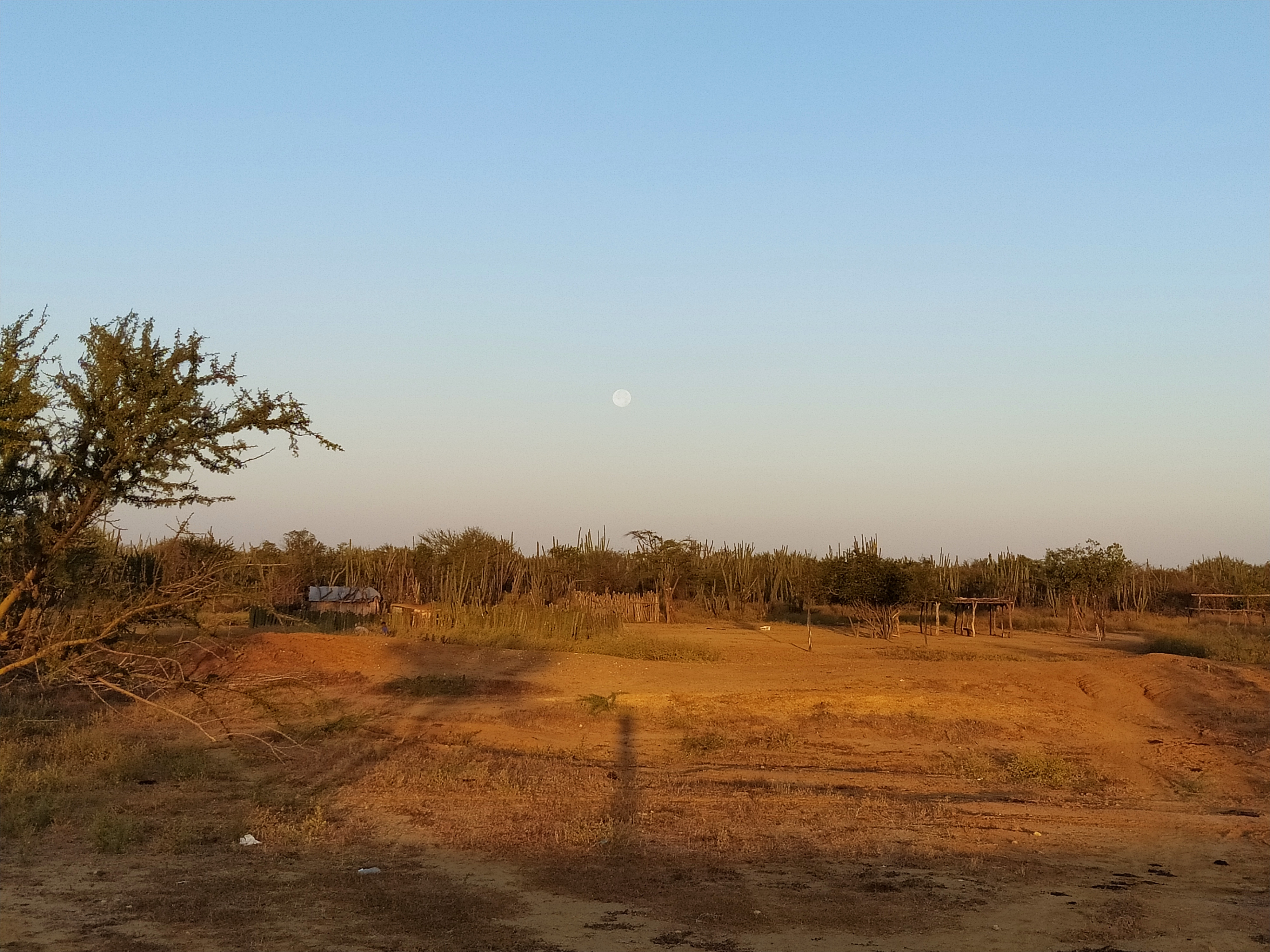
Territorio ancestral del pueblo Wayúu
Tierras y territorios que históricamente han estado ligados a un clan o e'irukuu y son reconocidos socialmente por el uso, la permanencia o la precedencia asociada a su cementerio ancestral y que han tenido un determinado linaje de parientes de línea materna, donde se dan las relaciones básicas de subsistencia y se constituye el ámbito tradicional de sus actividades sociales, económicas, culturales y espirituales.
Adaptado de: Decreto 2333 de 2014. (2014, 19 de noviembre). Ministerio del Interior.Departamento Administrativo Nacional de Estadística. (2024). Manual de diligenciamiento Cuestionario de Residentes por Vivienda y Lugares Especiales de Alojamiento (LEA).
Saldarriaga Roa, A. (2022, 9 de marzo). La ranchería de los Wayúu en La Guajira. Banco de la República de Colombia: Biblioteca Virtual.A'laüla: autoridad ancestral legítima del pueblo Wayúu
Tío materno que es la principal figura de autoridad legítima reconocida por el pueblo Wayúu. Es una persona mayor, madura, sabia, conocedora de su territorio ancestral y de su historia y que nace con el don de representar a su clan o e’irukuu hasta el día de su muerte y se identifica como la cabeza visible del apüshi (familia por línea materna) adscrito a un territorio. Mantiene la armonía y la paz en su territorio y media en otros aspectos socioculturales de la comunidad junto con otros hombres y mujeres mayores que también hacen parte del apüshi.
Mercado Epieyu, R. S. (2025). Estructura social y Ley de Origen Wayuu. Caso comunidad indígena de Santa Rosa, Manaure, La Guajira, 2012-2018. Trabajo Social, 27(1), 162-182. Sentencia T-172/19. (2019, 24 de abril). Corte Constitucional de Colombia (Gloria Stella Ortiz Delgado, M. P.).Autoridad tradicional del pueblo Wayúu
Miembro Wayúu que tiene una descendencia por línea materna, está registrado ante el Ministerio del Interior y es reconocido en asamblea bajo acta de posesión expedida en la alcaldía. Es una figura intermediaria entre el Estado y la comunidad que realiza preacuerdos y cumple funciones administrativas y de planeación para la gestión de recursos, programas y proyectos sobre temas que afecten directamente su territorio, teniendo en cuenta la Autoridad Ancestral legitima Wayúu y los miembros de la comunidad que representa.
Mercado Epieyu, R. S. (2025). Estructura social y Ley de Origen Wayuu. Caso comunidad indígena de Santa Rosa, Manaure, La Guajira, 2012-2018. Trabajo Social, 27(1), 162–182. Sentencia T-302/17. (2017, 8 de mayo). Corte Constitucional de Colombia (Aquiles Arrieta Gómez, M. P.).Vivienda tradicional del pueblo Wayúu
Edificación compuesta por varias áreas y que cuenta con su propia estructura para albergar un uso específico. Es construida con materiales propios del entorno o foráneos y que está separada una de otras de acuerdo con las costumbres y las tradiciones del pueblo indígena Wayúu.
Saldarriaga Roa, A. (2022, 9 de marzo). La ranchería de los Wayúu en La Guajira. Banco de la República de Colombia: Biblioteca Virtual.E'irukuu
Grupo de personas unidas por lazos de parentesco matrilineal asociado a un origen territorial que determina un linaje común y que se identifican con una denominación que han recibido de sus ancestros y que es generalmente representado por un animal o tótem.
Adoptado de: Alarcón Puentes, J. (2006). La sociedad wayuu, entre la quimera y la realidad. Gazeta de Antropología, 22, artículo 21. Departamento Administrativo Nacional de Estadística. (2018). Manual de diligenciamiento Cuestionario para unidades no residenciales y viviendas (desocupadas o de uso temporal). Cuestionario para LEA. Censo Nacional de Población y Vivienda.Líder del pueblo Wayúu
Miembro Wayúu que sin ser autoridad ejerce un liderazgo sobre su comunidad y que se rige según costumbres y tradiciones. Es una persona reconocida por su liderazgo, que entiende el español y/o el wayuunaiki, las tecnologías de la información y que cumple funciones asistenciales acompañando a la autoridad tradicional en lo que respecta a la gestión de recursos, programas y proyectos ante el Estado.
Sentencia T-172/19. (2019, 24 de abril). Corte Constitucional de Colombia (Gloria Stella Ortiz Delgado, M. P.).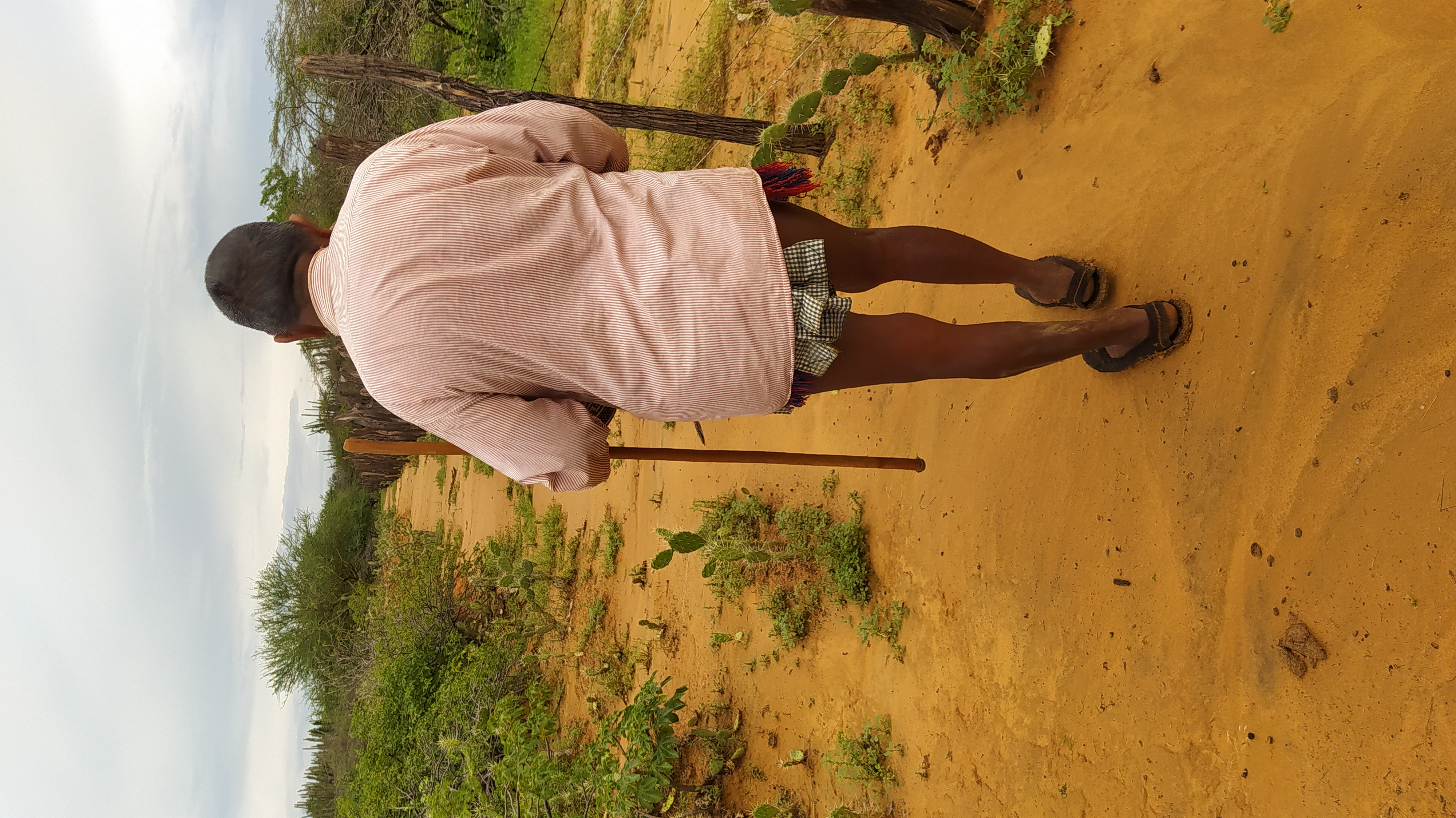
Ranchería, o comunidad del pueblo Wayúu
Asentamiento que puede o no estar formado por diversas construcciones cercanas, pero separadas unas de otras y que son necesarias para el desarrollo de las actividades económicas y sociales. Los residentes habituales son familias del pueblo indígena Wayúu y que están unidos por lazos de parentesco establecidos en torno a la línea materna.
Saldarriaga Roa, A. (2022, 9 de marzo). La ranchería de los Wayúu en La Guajira. Banco de la República de Colombia: Biblioteca Virtual.Putchipu / Pütchipuu: palabrero del pueblo Wayúu
Persona portadora y dinamizadora de la palabra, que con sabiduría, diplomacia, cautela y lucidez es intermediario en la solución de conflictos, especialmente en disputas entre los clanes o e'irukuu Wayúu o con otras etnias. Es solicitado por su prestigio y por ser autoridad moral, algo normalmente asociado con los saberes ancestrales.
Organización de las Naciones Unidas para la Educación, la Ciencia y la Cultura [UNESCO]. (s. f.). El sistema normativo de los wayuus, aplicado por el pütchipü’üi (“palabrero”).Jefe/a de vivienda del pueblo Wayúu
Persona mayor y residente habitual que es reconocido por los demás miembros de la vivienda como jefe o jefa, según corresponda.
Organización de las Naciones Unidas, Departamento de Asuntos Económicos y Sociales [ONU]. (2008). Principios y recomendaciones para los censos de población y habitación. Revisión 2.
Sukuaipa Wayuu
Pünta sünain aküjünakat süchiki.
Shikiisüin, no'ummai je sülaülashiikana mma sunainje tu alatira suchiki putchi Wayuu.
Wayuukanairüa
Koolotshi naa supunalaka wattajee Wayuu ekana jo'o yaa wajira, palamüiin sauje Kolompiaotta palaapunalu'u sunaiin Wenesuela soopula tu palaaka Kariwee. tu shiawaseeka akumajasu süüpuna tuu aeewalui noumain nee mio see naa wayunkana. akaatejirashi saapuna eirükun ashajashi tu nanuikukat wayuunaikuka, shiswatuin tu miouyuunkat suulu'u nee ріараa, naakujaiin akuuwaipa sukajee tu akuaipakat naatuma naa wayuukana tüü kanuliaka Normativo wayuu, sumaa waneerua akuwaipaa akaat
Adaptado de: Departamento Administrativo Nacional de Estadística. (2021). Informes de Estadística Sociodemográfica Aplicada.¿Jarat sajaapuinka suma'in wayuu?
Sajaapuin mmaa ejeere suttuin wajira, palaamuin soujee Kolompia otta palaapünalu'u sunain Wenesuela, sa'uu paala Karibe, Mmaapa eere wayuu otta eere naawaimalaiin.
Sistema Estadístico Nacional - SEN. (2024). Equipo técnico Mesa de movilidad Wayuu.
Territorio ancestral del pueblo Wayúu
Tierras y territorios que históricamente han estado ligados a un clan o e'irukuu y son reconocidos socialmente por el uso, la permanencia o la precedencia asociada a su cementerio ancestral y que han tenido un determinado linaje de parientes de línea materna, donde se dan las relaciones básicas de subsistencia y se constituye el ámbito tradicional de sus actividades sociales, económicas, culturales y espirituales.
Adaptado de: Decreto 2333 de 2014. (2014, 19 de noviembre). Ministerio del Interior.Departamento Administrativo Nacional de Estadística. (2024). Manual de diligenciamiento Cuestionario de Residentes por Vivienda y Lugares Especiales de Alojamiento (LEA).
Saldarriaga Roa, A. (2022, 9 de marzo). La ranchería de los Wayúu en La Guajira. Banco de la República de Colombia: Biblioteca Virtual.Emiouse'e kamairü shimain wayuuiin
Alaula so'uu eyu'ü shiaya palajatkat laula eenajushii suluu sumain wayuu. Shia wanee wayuu mio'u, atujasü jee shiirajüin tu o'umañuka sumaa tu achikukat kamaikat jousüü sumajira shiañeerajunuiin motusü o'utaleepa. Shia jaayaka shikijatuiin tuu e'irukuu jee apüshii (apüüshi so'uu eyuu) esu'u wanee pia sulu'u sumain. anawasü, jimatusu, achajawaisü sukuaipa awaalaja kasa e'in sulatuin sulu'upunaa Neepiapa naama tooloyu jee jieyuu miouyuu apushiin.
Mercado Epieyu, R. S. (2025). Estructura social y Ley de Origen Wayuu. Caso comunidad indígena de Santa Rosa, Manaure, La Guajira, 2012-2018. Trabajo Social, 27(1), 162-182. Sentencia T-172/19. (2019, 24 de abril). Corte Constitucional de Colombia (Gloria Stella Ortiz Delgado, M. P.).Wayuu shimiouse'e Nuupüshi (Nusi pünüü)
Nia chii mio'u alaula aneekunushi sakajee nüüpushi, nuusipünuu, chasüü nuulia sulu'u tu Michikat Miousuka so'u Mmaakat eerajushi sulu'ujee akotchijawa eesuu kara'alouta achuntushi suluje laulapia. Shia o niaaya ashajuika apulerüwa sulu'upuna Michika miousuka otta tu wayuukana yootokot amaawa supula kasa shimainjatu'in shiataiin tu kajaapulu'uka sukuaipaa tu sutneesekat Mmapa, achajana akuaipat supula suntuin tu noojotka antinuin lootuin ewarülee o'umañupa. julu'ujainjana naa wayuukana keekiipujanaka.
Mercado Epieyu, R. S. (2025). Estructura social y Ley de Origen Wayuu. Caso comunidad indígena de Santa Rosa, Manaure, La Guajira, 2012-2018. Trabajo Social, 27(1), 162–182. Sentencia T-302/17. (2017, 8 de mayo). Corte Constitucional de Colombia (Aquiles Arrieta Gómez, M. P.).Shiipia wayuu sümaiwajat
Akuumajushi suka kajuuyasu kasa esu Naamana tu a'injunaka tu a'injunaka akaa sulu'ujatu Mma e'ere naaya, kaayatawasü naakuaipalüü naa wyuukana.
Saldarriaga Roa, A. (2022, 9 de marzo). La ranchería de los Wayúu en La Guajira. Banco de la República de Colombia: Biblioteca Virtual.E'irukuu, o clan del pueblo Wayúu
Wayuu kolootushi papushewashi so'uu nei kolootojirashi sulu'u Nouma'in piirükawashi e'erajunushii sunainjee nemiouse shia naayawaseka wanee mü'ürüt
Adoptado de: Alarcón Puentes, J. (2006). La sociedad wayuu, entre la quimera y la realidad. Gazeta de Antropología, 22, artículo 21. Departamento Administrativo Nacional de Estadística. (2018). Manual de diligenciamiento Cuestionario para unidades no residenciales y viviendas (desocupadas o de uso temporal). Cuestionario para LEA. Censo Nacional de Población y Vivienda.Líder del pueblo Wayúu
Miembro Wayúu que sin ser autoridad ejerce un liderazgo sobre su comunidad y que se rige según costumbres y tradiciones. Es una persona reconocida por su liderazgo, que entiende el español y/o el wayuunaiki, las tecnologías de la información y que cumple funciones asistenciales acompañando a la autoridad tradicional en lo que respecta a la gestión de recursos, programas y proyectos ante el Estado.
Sentencia T-172/19. (2019, 24 de abril). Corte Constitucional de Colombia (Gloria Stella Ortiz Delgado, M. P.).
Ranchería, o comunidad del pueblo Wayúu
Asentamiento que puede o no estar formado por diversas construcciones cercanas, pero separadas unas de otras y que son necesarias para el desarrollo de las actividades económicas y sociales. Los residentes habituales son familias del pueblo indígena Wayúu y que están unidos por lazos de parentesco establecidos en torno a la línea materna.
Saldarriaga Roa, A. (2022, 9 de marzo). La ranchería de los Wayúu en La Guajira. Banco de la República de Colombia: Biblioteca Virtual.Putchipu / Pütchipuu: palabrero del pueblo Wayúu
Persona portadora y dinamizadora de la palabra, que con sabiduría, diplomacia, cautela y lucidez es intermediario en la solución de conflictos, especialmente en disputas entre los clanes o e'irukuu Wayúu o con otras etnias. Es solicitado por su prestigio y por ser autoridad moral, algo normalmente asociado con los saberes ancestrales.
Organización de las Naciones Unidas para la Educación, la Ciencia y la Cultura [UNESCO]. (s. f.). El sistema normativo de los wayuus, aplicado por el pütchipü’üi (“palabrero”).Jefe/a de vivienda del pueblo Wayúu
Persona mayor y residente habitual que es reconocido por los demás miembros de la vivienda como jefe o jefa, según corresponda.
Organización de las Naciones Unidas, Departamento de Asuntos Económicos y Sociales [ONU]. (2008). Principios y recomendaciones para los censos de población y habitación. Revisión 2.
Wayúu Culture
Find standardized definitions here.
Key Concepts for Understanding the Wayúu Indigenous People
Wayúu Indigenous People
An ethnic group of Amerindian descent living on the Guajira Peninsula in northern Colombia and northwestern Venezuela on the Caribbean Sea. Their identity is built around their belonging to the ancestral Wayúu territory, their division into clans or e'irukuus, the use of their own language Wayuunaiki, the recognition of their territorial authorities or a'laulas, the resolution of conflicts according to the Wayúu regulatory system, among other practices, customs, and elements of their culture.
Adaptado de: Departamento Administrativo Nacional de Estadística. (2021). Informes de Estadística Sociodemográfica Aplicada.What is the Wayúu geographical area?
An area of land between the La Guajira peninsula in northern Colombia and northwestern Venezuela, on the Caribbean Sea, inhabited by the Wayúu people and where they live.
Sistema Estadístico Nacional - SEN. (2024). Equipo técnico Mesa de movilidad Wayuu.
Ancestral territory of the Wayúu people
Lands and territories that have historically been linked to a clan or e'irukuu and are socially recognized for their use, permanence, or precedence associated with their ancestral cemetery. They have had a specific lineage of maternal relatives, where basic subsistence relationships exist and the traditional sphere of their social, economic, cultural, and spiritual activities is established.
Adapted from: Decreto 2333 de 2014. (2014, 19 de noviembre). Ministerio del Interior.Departamento Administrativo Nacional de Estadística. (2024). Manual de diligenciamiento Cuestionario de Residentes por Vivienda y Lugares Especiales de Alojamiento (LEA).
Saldarriaga Roa, A. (2022, 9 de marzo). La ranchería de los Wayúu en La Guajira. Banco de la República de Colombia: Biblioteca Virtual.Legitimate Wayúu/A'laüla Ancestral Authority
Maternal uncle who is the main legitimate authority figure recognized by the Wayúu people. He is an elderly, mature, wise person, knowledgeable about his ancestral territory and history, who is born with the gift of representing his clan or e'irukuu until the day of his death and is identified as the visible head of the apüshi (family through the maternal line) attached to a territory. He maintains harmony and peace in his territory and mediates in other sociocultural aspects of the community together with other older men and women who are also part of the apüshi.
Mercado Epieyu, R. S. (2025). Estructura social y Ley de Origen Wayuu. Caso comunidad indígena de Santa Rosa, Manaure, La Guajira, 2012-2018. Trabajo Social, 27(1), 162-182. Sentencia T-172/19. (2019, 24 de abril). Corte Constitucional de Colombia (Gloria Stella Ortiz Delgado, M. P.).Wayúu Traditional Authority
A Wayúu member who has maternal descent, is registered with the Ministry of the Interior, and is recognized in assembly under a certificate of possession issued by the mayor's office. This person acts as an intermediary between the State and the community, reaching preliminary agreements and performing administrative and planning functions for the management of resources, programs, and projects on issues that directly affect their territory, taking into account the legitimate Wayúu Ancestral Authority and the members of the community they represent.
Mercado Epieyu, R. S. (2025). Estructura social y Ley de Origen Wayuu. Caso comunidad indígena de Santa Rosa, Manaure, La Guajira, 2012-2018. Trabajo Social, 27(1), 162–182. Sentencia T-302/17. (2017, 8 de mayo). Corte Constitucional de Colombia (Aquiles Arrieta Gómez, M. P.).Traditional Wayúu dwelling
A building composed of several areas, each with its own structure for a specific use. It is built with local or foreign materials and is separated from others in accordance with the customs and traditions of the Wayúu indigenous people.
Saldarriaga Roa, A. (2022, 9 de marzo). La ranchería de los Wayúu en La Guajira. Banco de la República de Colombia: Biblioteca Virtual.Wayúu Clan/ E'irukuu
A group of people united by matrilineal kinship ties associated with a territorial origin that determines a common lineage and who identify themselves with a name they have received from their ancestors and which is generally represented by an animal or totem.
Adoptado de: Alarcón Puentes, J. (2006). La sociedad wayuu, entre la quimera y la realidad. Gazeta de Antropología, 22, artículo 21. Departamento Administrativo Nacional de Estadística. (2018). Manual de diligenciamiento Cuestionario para unidades no residenciales y viviendas (desocupadas o de uso temporal). Cuestionario para LEA. Censo Nacional de Población y Vivienda.Leader of the Wayúu people
A Wayúu member who, without being an authority figure, exercises leadership over their community and is governed by customs and traditions. They are a person recognized for their leadership, who understands Spanish and/or Wayuunaiki, information technologies, and who performs support functions, accompanying the traditional authority in matters relating to the management of resources, programs, and projects before the State.
Sentencia T-172/19. (2019, 24 de abril). Corte Constitucional de Colombia (Gloria Stella Ortiz Delgado, M. P.).
Ranchería /Wayúu Community
A settlement that may or may not consist of several buildings located close to each other but separated from one another, which are necessary for economic and social activities. The usual residents are families from the Wayúu indigenous people who are united by kinship ties established around the maternal line.
Saldarriaga Roa, A. (2022, 9 de marzo). La ranchería de los Wayúu en La Guajira. Banco de la República de Colombia: Biblioteca Virtual.Putchipu or Pütchipu'u Wayúu
A person who carries and promotes the word, who with wisdom, diplomacy, caution, and lucidity acts as an intermediary in the resolution of conflicts, especially in disputes between clans or e'irukuu Wayúu or with other ethnic groups. He is sought after for his prestige and moral authority, something normally associated with ancestral knowledge.
Organización de las Naciones Unidas para la Educación, la Ciencia y la Cultura [UNESCO]. (s. f.). El sistema normativo de los wayuus, aplicado por el pütchipü’üi (“palabrero”).Wayúu Head of Household
An elderly person and regular resident who is recognized by the other members of the household as the head of household, as appropriate.
Organización de las Naciones Unidas, Departamento de Asuntos Económicos y Sociales [ONU]. (2008). Principios y recomendaciones para los censos de población y habitación. Revisión 2.